

Global Economics · South Asia · Energy · 3 April 2026
Pakistan petrol price hike 2026
Islamabad, Pakistan
Published: 3 April 2026
~820 words · 5 min read
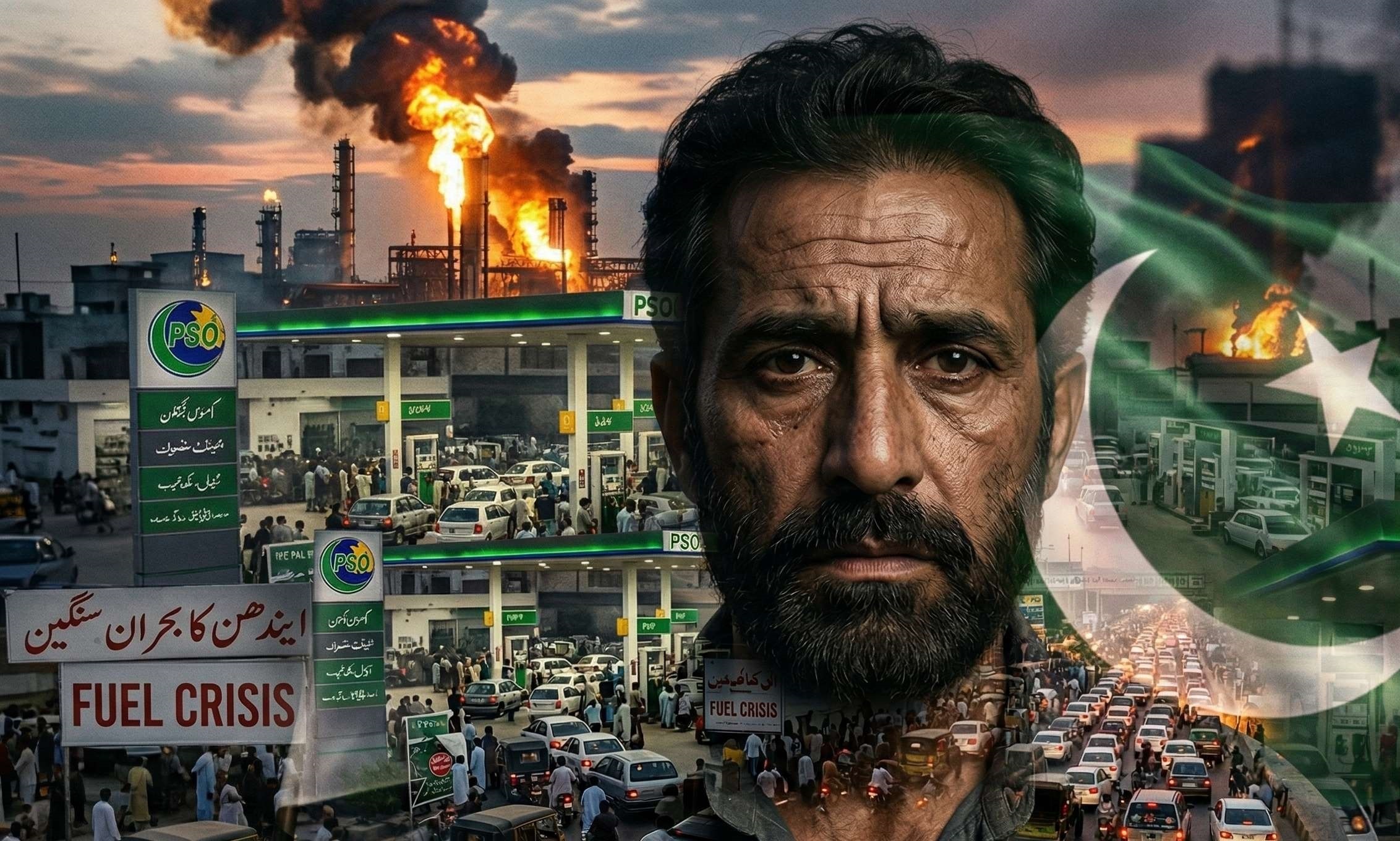
Long queues have become a daily reality at petrol stations across Lahore and Karachi as fuel price anxiety grips the country. (April 2026)
Brent Crude$110↑ Per barrelPetrol HikeRs. 25↑ Expected this weekPKR Rate~290↑ Rs per USD
The queue outside the petrol pump on Ferozepur Road in Lahore began forming before dawn. By seven in the morning, motorcycle riders, rickshaw drivers, and a handful of desperate car owners had snaked the line halfway down the block. Nobody was panicking — not yet. But everyone had heard the same rumour: petrol prices in Pakistan are going up again. Perhaps as soon as next week. Perhaps by Rs. 25 a litre. The faces in that queue told you everything the official statements would not.
Fire in the Middle East, Smoke in Islamabad

The origins of Pakistan’s current misery lie roughly 4,000 kilometres to the west, in the smouldering theatre of the Iran-Israel conflict. What began as a cycle of targeted strikes and retaliatory missile salvoes has metastasised into something the energy markets genuinely feared: sustained disruption to Persian Gulf shipping lanes and a premium of pure, undiluted anxiety baked into every barrel of crude.
Brent crude, the international benchmark, is hovering around $110 per barrel — a level not seen since the chaotic months following Russia’s invasion of Ukraine. The logic of oil markets is brutally simple: when conflict threatens the Strait of Hormuz, through which roughly a fifth of the world’s oil supply travels daily, traders do not wait for ships to actually sink before bidding prices up. The fear is enough. And right now, the fear is considerable.
Key facts — Pakistan oil shock 2026
- Pakistan imports approximately 80% of its crude oil requirements
- One-fifth of global oil supply passes through the Strait of Hormuz daily
- Brent crude at $110/barrel adds $300–400 million to Pakistan’s monthly import bill
- Pakistan’s petrol price hike of Rs. 25/litre is expected by mid-April 2026
- Electricity tariffs in Pakistan are directly linked to furnace oil and RLNG costs
A Heavy Toll at the Fuel Pump
Pakistan imports nearly 80% of its crude oil requirements. It does not have the luxury of domestic buffers, strategic reserves of any meaningful scale, or a sovereign wealth fund to absorb shocks. When global oil prices in Pakistan terms move sharply, the country bleeds — and it bleeds in foreign exchange it can ill afford to lose.
The numbers are stark. At $110 a barrel, Pakistan’s monthly oil import bill balloons by roughly $300–400 million compared to the relative calm of $85-a-barrel pricing earlier this year. The State Bank’s foreign exchange reserves, which have been clawing their way back toward fragile stability under the IMF’s Extended Fund Facility, face immediate pressure. The rupee — already wobbling near Rs. 290 to the dollar — finds itself on the wrong end of a demand surge for dollars. A currency under pressure means imported oil becomes even more expensive in local terms. It is a doom loop, and Pakistan has been caught in versions of it before.
“Pakistan’s economy resembles a car running on fumes, held together by IMF bailout wire and optimism — and someone just raised the price of petrol.”
The government’s choices are unpleasant in every direction. Absorb the Pakistan fuel price increase through subsidies? The IMF will object — loudly. Pakistan’s fiscal consolidation commitments leave precious little room for that sort of generosity. Pass the cost on to consumers? That is almost certainly what will happen. Hence the Rs. 25 whisper circulating in Lahore, Karachi, and Peshawar this week.
The Rickshaw Driver, the Roti, and the Electricity Bill

For millions of daily wage earners, every rupee increase in fuel costs restructures the entire household budget. (Karachi, 2026)
Tariq drives a CNG rickshaw in Karachi’s Orangi Town. He earns perhaps Rs. 1,200 on a good day, and he will tell you, with the weary authority of a man who has run these calculations too many times, that every Rs. 10 increase in fuel effectively cuts his take-home by 15%. A Rs. 25 petrol price hike does not just sting — it restructures his entire week.
His story is replicated millions of times across Pakistan. Transport costs will rise. When transport costs rise, so does the price of moving flour, vegetables, and cooking oil from farms to markets to doorsteps. Pakistan food inflation — already running at painful levels — will tick higher. The chain of consequences is not complicated; it is simply relentless.
Then there is electricity. Pakistan’s electricity bill increases are tied, through a labyrinthine set of fuel adjustment charges, to the cost of furnace oil and RLNG used to run its thermal plants. A sustained spike in oil prices does not stay confined to the pump. It creeps into monthly electricity bills at the worst possible moment — as April’s mild weather gives way to the furnace of a Pakistani summer, and air conditioners roar to life across every household that can afford one.
For those who cannot afford one, this season will simply be endured. That is the quiet, invisible suffering that never quite makes it into the finance ministry’s press releases.
What Islamabad Must Do — and Fast
The government is not without options, even if none are painless. An emergency renegotiation of oil procurement contracts to lock in some forward pricing would limit exposure if the conflict drags on. Accelerating the transition of the public transport fleet to electric — a policy discussed endlessly and delivered minimally — would reduce Pakistan’s structural vulnerability to global oil shocks over the medium term.
More immediately, targeted cash transfers to the most vulnerable households, funded through the Benazir Income Support Programme (BISP)‘s existing infrastructure, could cushion the blow of the petrol price hike without triggering the subsidy alarm bells that make the IMF nervous. It is not a solution. It is triage.
The harder truth is this: Pakistan’s vulnerability to oil price shocks is not a weather event. It is a policy failure, accumulated across decades of neglect toward energy diversification, fiscal discipline, and industrial self-sufficiency. The Iran-Israel escalation merely pulled back the curtain on an economy that has been running on borrowed time — and borrowed money — for far too long.
Back on Ferozepur Road, the queue is still moving. Slowly. Tariq’s counterpart here, a motorcycle taxi rider named Asif, fills up his tank and calculates what he can no longer afford this week. He does not think about Brent crude or the Strait of Hormuz. He thinks about school fees. He thinks about atta prices. He thinks about whether he can keep going.
That is the real cost of the 2026 oil shock. And it is being paid, one litre at a time, by people who had nothing to do with starting it.
Global Economics · South Asia · Energy · 3 April 2026
Pakistan petrol price hike 2026
Islamabad, Pakistan
Published: 3 April 2026
~820 words · 5 min read
Long queues have become a daily reality at petrol stations across Lahore and Karachi as fuel price anxiety grips the country. (April 2026)
Brent Crude$110↑ Per barrelPetrol HikeRs. 25↑ Expected this weekPKR Rate~290↑ Rs per USD
The queue outside the petrol pump on Ferozepur Road in Lahore began forming before dawn. By seven in the morning, motorcycle riders, rickshaw drivers, and a handful of desperate car owners had snaked the line halfway down the block. Nobody was panicking — not yet. But everyone had heard the same rumour: petrol prices in Pakistan are going up again. Perhaps as soon as next week. Perhaps by Rs. 25 a litre. The faces in that queue told you everything the official statements would not.
Fire in the Middle East, Smoke in Islamabad
The origins of Pakistan’s current misery lie roughly 4,000 kilometres to the west, in the smouldering theatre of the Iran-Israel conflict. What began as a cycle of targeted strikes and retaliatory missile salvoes has metastasised into something the energy markets genuinely feared: sustained disruption to Persian Gulf shipping lanes and a premium of pure, undiluted anxiety baked into every barrel of crude.
Brent crude, the international benchmark, is hovering around $110 per barrel — a level not seen since the chaotic months following Russia’s invasion of Ukraine. The logic of oil markets is brutally simple: when conflict threatens the Strait of Hormuz, through which roughly a fifth of the world’s oil supply travels daily, traders do not wait for ships to actually sink before bidding prices up. The fear is enough. And right now, the fear is considerable.
Key facts — Pakistan oil shock 2026
- Pakistan imports approximately 80% of its crude oil requirements
- One-fifth of global oil supply passes through the Strait of Hormuz daily
- Brent crude at $110/barrel adds $300–400 million to Pakistan’s monthly import bill
- Pakistan’s petrol price hike of Rs. 25/litre is expected by mid-April 2026
- Electricity tariffs in Pakistan are directly linked to furnace oil and RLNG costs
A Heavy Toll at the Fuel Pump

Pakistan imports nearly 80% of its crude oil requirements. It does not have the luxury of domestic buffers, strategic reserves of any meaningful scale, or a sovereign wealth fund to absorb shocks. When global oil prices in Pakistan terms move sharply, the country bleeds — and it bleeds in foreign exchange it can ill afford to lose.
The numbers are stark. At $110 a barrel, Pakistan’s monthly oil import bill balloons by roughly $300–400 million compared to the relative calm of $85-a-barrel pricing earlier this year. The State Bank’s foreign exchange reserves, which have been clawing their way back toward fragile stability under the IMF’s Extended Fund Facility, face immediate pressure. The rupee — already wobbling near Rs. 290 to the dollar — finds itself on the wrong end of a demand surge for dollars. A currency under pressure means imported oil becomes even more expensive in local terms. It is a doom loop, and Pakistan has been caught in versions of it before.
“Pakistan’s economy resembles a car running on fumes, held together by IMF bailout wire and optimism — and someone just raised the price of petrol.”
The government’s choices are unpleasant in every direction. Absorb the Pakistan fuel price increase through subsidies? The IMF will object — loudly. Pakistan’s fiscal consolidation commitments leave precious little room for that sort of generosity. Pass the cost on to consumers? That is almost certainly what will happen. Hence the Rs. 25 whisper circulating in Lahore, Karachi, and Peshawar this week.
The Rickshaw Driver, the Roti, and the Electricity Bill
For millions of daily wage earners, every rupee increase in fuel costs restructures the entire household budget. (Karachi, 2026)
Tariq drives a CNG rickshaw in Karachi’s Orangi Town. He earns perhaps Rs. 1,200 on a good day, and he will tell you, with the weary authority of a man who has run these calculations too many times, that every Rs. 10 increase in fuel effectively cuts his take-home by 15%. A Rs. 25 petrol price hike does not just sting — it restructures his entire week.
His story is replicated millions of times across Pakistan. Transport costs will rise. When transport costs rise, so does the price of moving flour, vegetables, and cooking oil from farms to markets to doorsteps. Pakistan food inflation — already running at painful levels — will tick higher. The chain of consequences is not complicated; it is simply relentless.
Then there is electricity. Pakistan’s electricity bill increases are tied, through a labyrinthine set of fuel adjustment charges, to the cost of furnace oil and RLNG used to run its thermal plants. A sustained spike in oil prices does not stay confined to the pump. It creeps into monthly electricity bills at the worst possible moment — as April’s mild weather gives way to the furnace of a Pakistani summer, and air conditioners roar to life across every household that can afford one.
For those who cannot afford one, this season will simply be endured. That is the quiet, invisible suffering that never quite makes it into the finance ministry’s press releases.
What Islamabad Must Do — and Fast
The government is not without options, even if none are painless. An emergency renegotiation of oil procurement contracts to lock in some forward pricing would limit exposure if the conflict drags on. Accelerating the transition of the public transport fleet to electric — a policy discussed endlessly and delivered minimally — would reduce Pakistan’s structural vulnerability to global oil shocks over the medium term.
More immediately, targeted cash transfers to the most vulnerable households, funded through the Benazir Income Support Programme (BISP)‘s existing infrastructure, could cushion the blow of the petrol price hike without triggering the subsidy alarm bells that make the IMF nervous. It is not a solution. It is triage.
The harder truth is this: Pakistan’s vulnerability to oil price shocks is not a weather event. It is a policy failure, accumulated across decades of neglect toward energy diversification, fiscal discipline, and industrial self-sufficiency. The Iran-Israel escalation merely pulled back the curtain on an economy that has been running on borrowed time — and borrowed money — for far too long.
Back on Ferozepur Road, the queue is still moving. Slowly. Tariq’s counterpart here, a motorcycle taxi rider named Asif, fills up his tank and calculates what he can no longer afford this week. He does not think about Brent crude or the Strait of Hormuz. He thinks about school fees. He thinks about atta prices. He thinks about whether he can keep going.
That is the real cost of the 2026 oil shock. And it is being paid, one litre at a time, by people who had nothing to do with starting it.
